Introduction
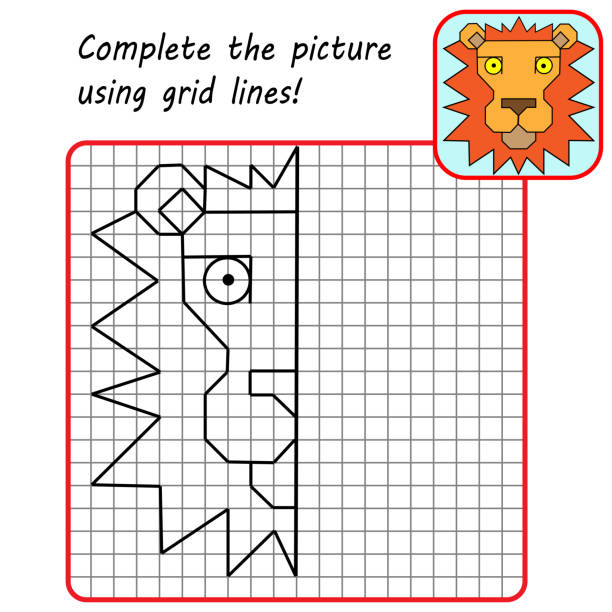
A grid drawing lion is an educational drawing method that overlays a coordinate matrix onto a reference photograph of a lion, enabling young learners to replicate the subject cell by cell to master spatial proportions and visual analysis. According to the National Association for the Education of Young Children (NAEYC), structured visual-spatial activities during early childhood significantly enhance cognitive mapping, geometric reasoning, and bilateral hand-eye coordination. By breaking a complex wild animal into manageable intersecting squares, educators and parents can introduce systematic drawing techniques that build confidence long before freehand sketching is mastered.
Visual Learning & Skill Snapshot:
- Core Focus: Systematic replication of a lion reference photograph using proportional grid coordinates.
- Target Skill: Spatial reasoning, visual discrimination, fine-motor proportion control, and analytical observation.
- Key Recommendation: Pair printable worksheets with real-world photo flashcards to ground abstract grid lines in tangible wildlife features.
Core Principles and Visual Learning Overview
Grid drawing lions transforms an intimidating organic shape into discrete geometric puzzles, making complex wildlife anatomy accessible to early elementary students. When children isolate a single grid square containing a lion mane fragment or eye contour, cognitive overload is minimized, allowing complete focus on line angle, negative space, and intersection points. Integrating real Photo Flashcards alongside these printables encourages learners to examine authentic textures, facial symmetries, and fur patterns before transferring observations to paper. This methodical breakdown bridges the gap between passive observation and active artistic creation, supporting fundamental cognitive milestones established within comprehensive Educational Activities.
Key Specifications and Breakdown
| Age / Learning Stage | Visual Skill & Grid Ratio | Pedagogical Application & Scaffolding |
|---|---|---|
| Ages 5-6 (Early Explorer) | 2×2 or 3×3 simple grid, bold outlines | Focuses on basic contour recognition, major facial features, and gross motor hand control. |
| Ages 7-8 (Developing Artist) | 4×4 intermediate grid with sub-coordinates | Emphasizes proportion estimation, mane texture alignment, and precise pencil pressure regulation. |
| Ages 9-10 (Advanced Observer) | 5×5 or greater complex grid matrix | Targets shadow mapping, detailed facial expression replication, and advanced spatial scaling. |
Systematic visual division supports cognitive mapping by reducing complex multi-part visual stimuli into manageable operational chunks that reinforce working memory and analytical problem-solving. — National Art Education Association (NAEA)
Step-by-Step Practical Application and Printing Guidelines
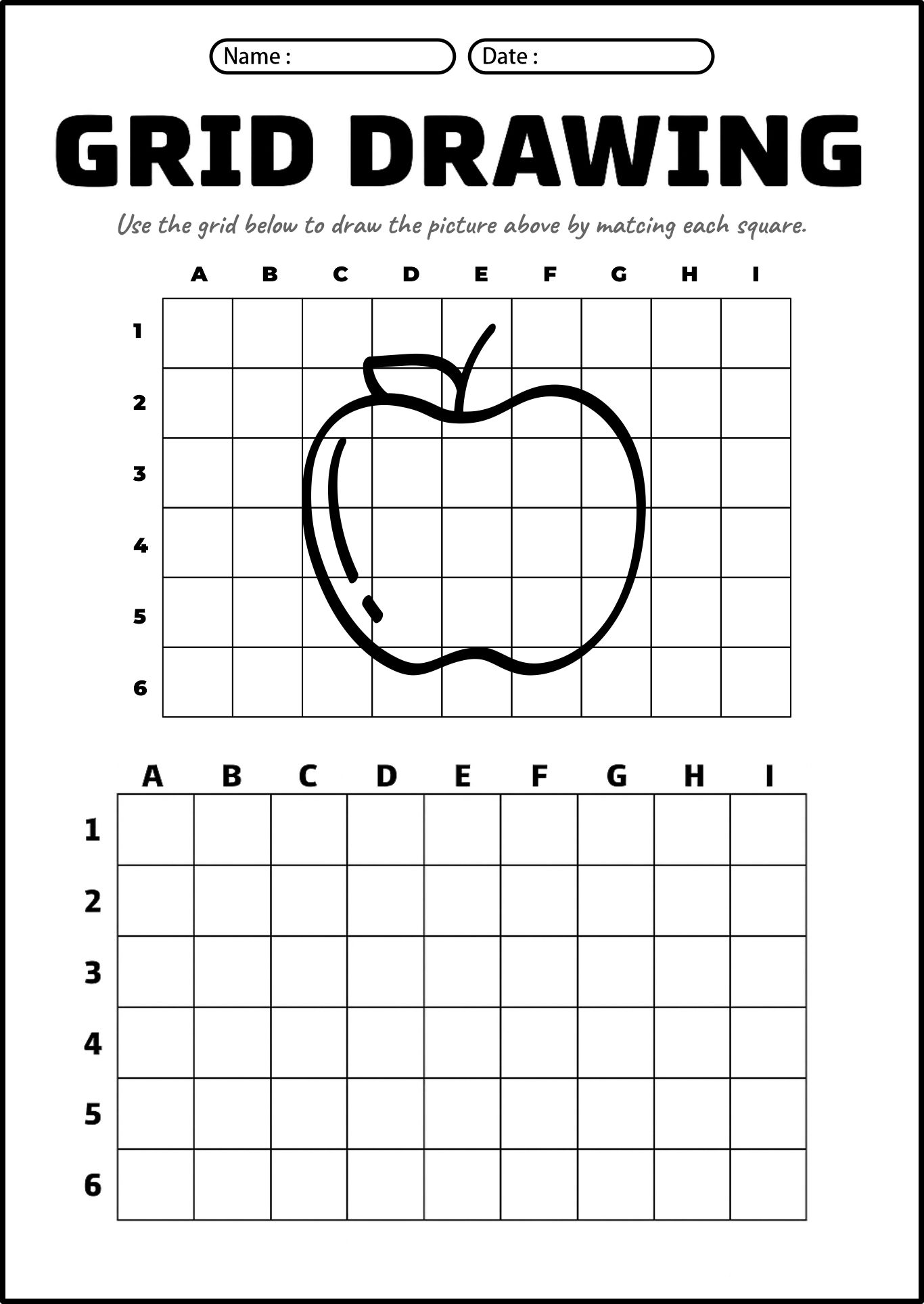
Executing a successful grid drawing lion session requires high-contrast printable worksheets, sharp pencils, and unlined drawing paper scaled to match the grid proportions. Educators should begin by guiding the child to identify specific coordinate locations, such as row B column 3, before sketching the lines contained strictly within that boundary. Utilizing professional-grade resources found within specialized Grid Drawing collections ensures that grid lines remain crisp and easy for developing eyes to follow without causing visual fatigue.
Common Challenges and How to Avoid Them
Young learners frequently struggle with proportional distortion by attempting to draw the entire lion at once rather than focusing on one isolated grid square at a time. To overcome this hurdle, provide an opaque window card or a masking index card that allows children to cover all surrounding squares, isolating their visual attention exclusively on the target cell. Encouraging frequent pauses to compare the drawn cell against the reference photo ensures that perspective errors are caught and corrected immediately during the early sketching phase.
💬 Frequently Asked Questions
Explore More Free Learning Printables and Visual Activities on WePhotoAgency
Enhance early childhood development programs with expertly designed resources, printable worksheets, and visual learning tools available directly through the main library at WePhotoAgency.com. Providing children with structured artistic challenges establishes a lifelong foundation for creative confidence and advanced visual literacy.
Visual Reference Gallery