Introduction
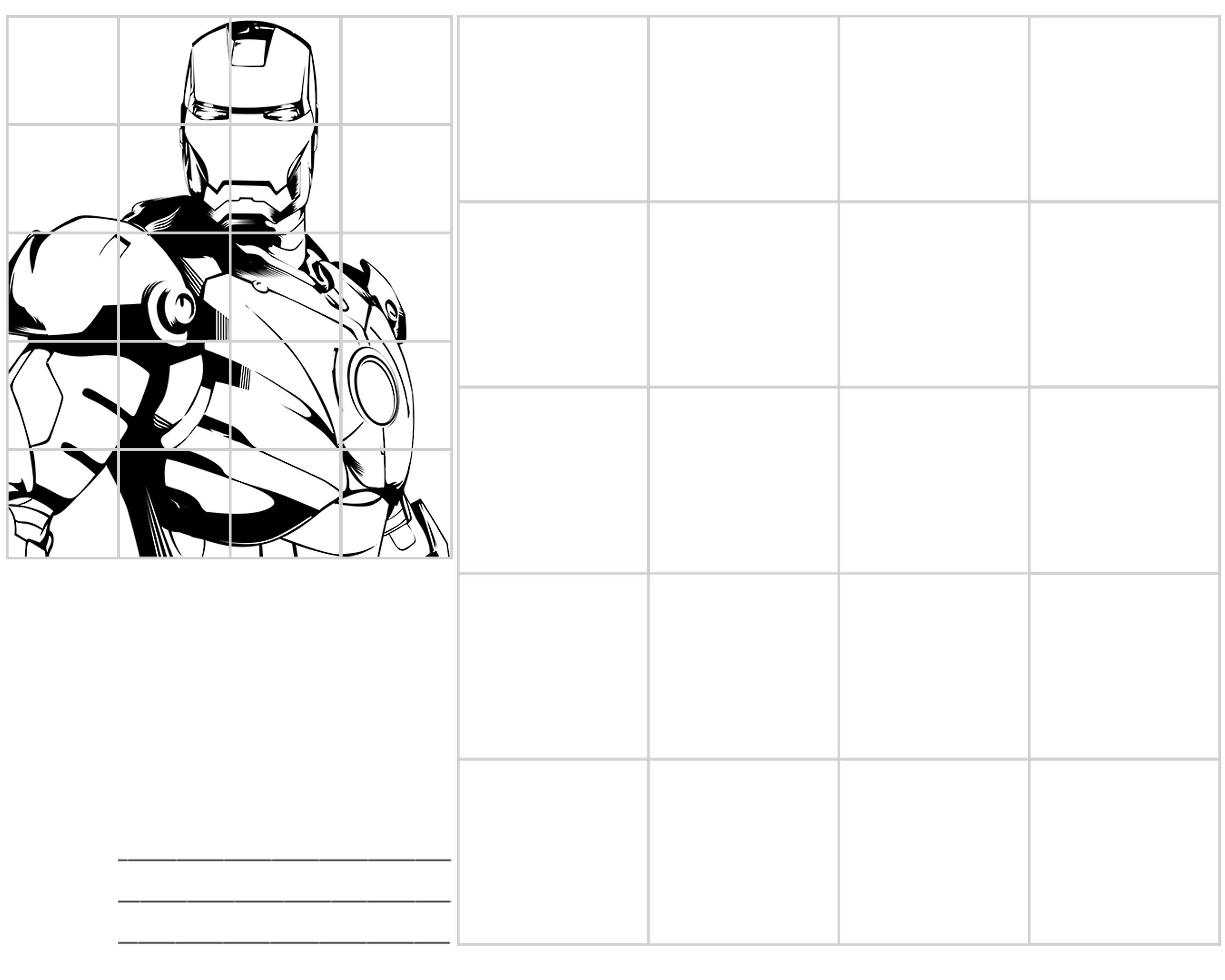
Grid drawing exercises utilize a structured matrix overlay to break complex visual compositions into manageable coordinate segments, teaching young children accurate proportion estimation and spatial organization. According to the National Art Education Association (NAEA), structured observational drawing activities significantly enhance perceptual accuracy, fine-motor coordination, and spatial cognition during formative developmental years. Educators and parents leverage these printable worksheets alongside real Photo Flashcards to bridge concrete visual references with abstract coordinate mapping, creating a solid foundation for advanced artistic and geometrical capabilities. Utilizing specialized Grid Drawing templates allows learners to process complex visual data one single grid box at a time.
Visual Learning & Skill Snapshot:
- Core Focus: Systematic coordinate-based visual replication using structured grids.
- Target Skill: Spatial reasoning, visual discrimination, fine-motor proportion, and observation.
- Key Recommendation: Pair photographic reference sheets with low-complexity 2×2 grids before advancing to detailed multi-square matrices.
Core Principles and Visual Learning Overview
Grid drawing exercises fundamentally transform holistic visual processing into targeted analytical observation by training the brain to look at individual line intersections, negative space, and proportional relationships within a localized boundary. When children copy a picture square by square, the overwhelming complexity of an entire photograph dissolves into small, solvable puzzles of shape and angle. This methodology reinforces bilateral coordination, hand-eye synchronization, and cognitive flexibility as learners constantly reference coordinates between source images and blank templates. Integrating comprehensive Educational Activities featuring clear photographic subjects ensures that children maintain high engagement while strengthening critical visual-spatial neural pathways.
Key Specifications and Breakdown
| Age / Learning Stage | Visual Skill & Grid Ratio | Pedagogical Application & Scaffolding |
|---|---|---|
| Ages 4-5 (Early Pre-K) | 2×2 or 3×3 simple matrices with thick, high-contrast photographic outlines. | Focuses on basic quadrant identification and horizontal-vertical alignment using simple shapes. |
| Ages 6-7 (Early Elementary) | 4×4 balanced grids paired with familiar animal and nature subjects. | Develops proportional scaling, line continuity, and observational patience across adjacent squares. |
| Ages 8-10 (Advanced Elementary) | 6×6 detailed grids featuring complex textures and fine photographic details. | Refines precision line-weight, angle estimation, and independent self-correction mechanisms. |
Systematic visual breaking through grid-based partitioning actively accelerates the development of right-hemisphere cognitive mapping and fine-motor precision in school-age learners. — National Art Education Association (NAEA)
Step-by-Step Practical Application and Printing Guidelines
Executing successful grid drawing exercises requires careful preparation of physical printouts, clear reference imagery, and proper writing implements that prevent smudging. Educators should print both the master image and the blank grid sheet on sturdy cardstock to withstand repeated eraser friction and pencil pressure. Instructors should demonstrate how to isolate a single grid square using a paper mask or pointer card, encouraging the child to look exclusively at that specific coordinate zone rather than the finished drawing. Guiding learners to establish light anchor points for major intersecting lines before rendering fine details ensures accurate final proportions across the entire composition.
Common Challenges and How to Avoid Them
Children frequently struggle with grid drawing exercises when attempting to render an entire object at once instead of isolating individual squares, leading to skewed proportions and early frustration. Educators can easily overcome this obstacle by providing opaque framing cards that block out surrounding squares, forcing the young artist to concentrate entirely on one localized coordinate at a time. Furthermore, ensuring that source images feature crisp, well-lit subjects prevents confusion caused by deep shadows or ambiguous boundaries during the observational mapping process.
💬 Frequently Asked Questions
Explore More Free Learning Printables and Visual Activities on WePhotoAgency
Supporting early childhood cognitive development and artistic confidence requires access to versatile, professionally structured visual tools designed for diverse learning environments. Explore an extensive collection of printable resources, instructional guides, and creative templates by visiting WePhotoAgency.com to elevate daily educational routines.
Visual Reference Gallery