Introduction
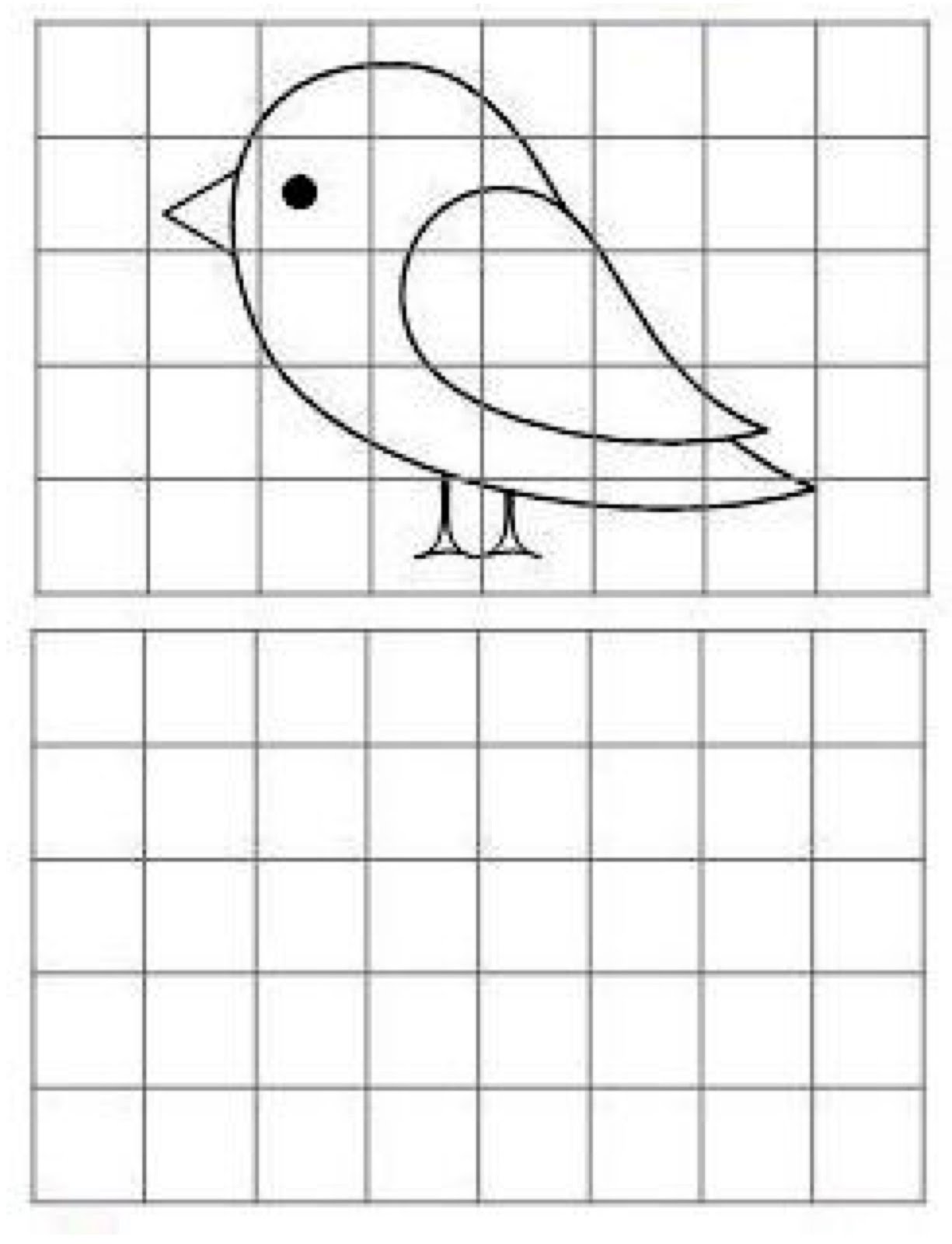
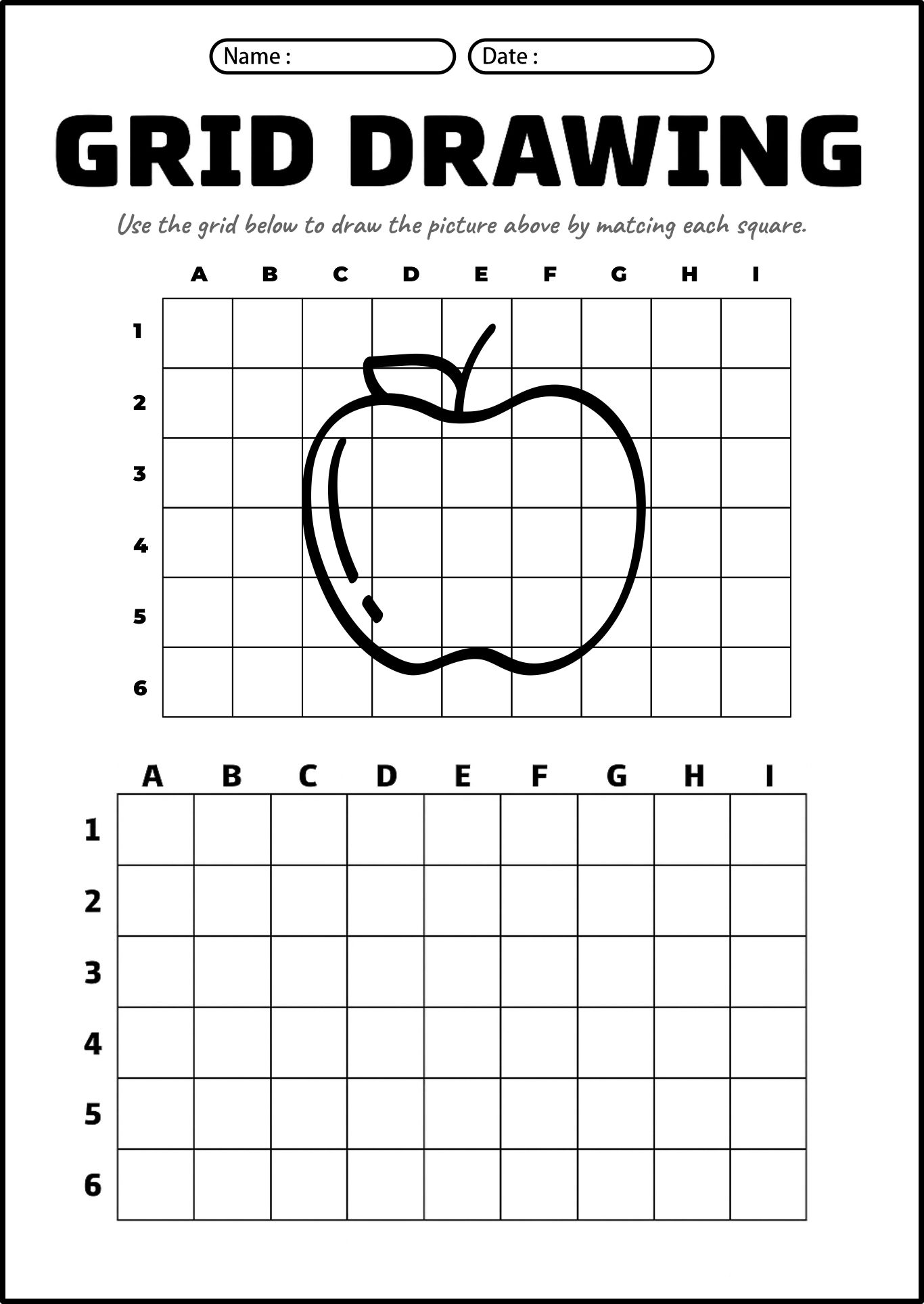
Grid drawing examples are structured visual worksheets utilizing geometric coordinate systems to help children break complex pictures down into manageable sections for accurate replication. According to the National Association for the Education of Young Children (NAEYC), hands-on graphic activities actively foster fine motor control, cognitive organization, and foundational spatial problem-solving skills in early childhood education. Utilizing printable Grid Drawing sheets bridges the gap between abstract visual perception and concrete line execution. Educators and parents leverage these structured visual templates to enhance observation, coordinate mapping, and proportional balance.
Visual Learning & Skill Snapshot:
- Core Focus: Structured coordinate-based drawing worksheets utilizing photographic and iconic visual subjects.
- Target Skill: Spatial reasoning, visual discrimination, fine-motor proportion, and photo-based concept mastery.
- Key Recommendation: Pair simpler 2×2 or 3×3 photo matrices with real-world objects before transitioning to complex multi-box grids.
Core Principles and Visual Learning Overview
Grid drawing examples teach children how to isolate isolated visual segments rather than attempting to render an entire complex image at once. By overlaying a transparent coordinate matrix onto real photo visual flashcards, learners focus exclusively on the specific intersections, curves, and lines contained within a single square. This practice systematically shifts cognitive processing from symbolic generalization—such as drawing a generic house shape—to objective observational accuracy, such as noting exact angles and negative space. Integrating high-contrast Photo Flashcards as foundational reference images strengthens visual memory and enhances direct translation from three-dimensional photography to two-dimensional representation.
Key Specifications and Breakdown
| Age / Learning Stage | Visual Skill & Grid Ratio | Pedagogical Application & Scaffolding |
|---|---|---|
| Ages 4-5 (Early Learners) | 2×2 or 3×3 simple matrices with thick, high-contrast borders | Focuses on basic shape recognition, directional tracking, and single-square line replication using tactile Educational Activities. |
| Ages 6-7 (Early Elementary) | 4×4 or 5×5 photo-based coordinate grids | Develops intermediate proportion estimation, horizontal/vertical alignment, and cross-reference observation using familiar nature or animal photography. |
| Ages 8+ (Advanced Practice) | 6×6 and greater detailed multi-box matrices | Refines intricate detail mapping, scale modification, shading transition, and independent error-checking strategies. |
Systematic visual breaking and spatial coordinate mapping significantly accelerate neurological development for observational proportion estimation and fine motor execution — National Art Education Association (NAEA)
Step-by-Step Practical Application and Printing Guidelines
Implementing effective grid drawing exercises requires clear print setups, uniform cell sizing, and distraction-free workspace environments. Educators should print reference photo sheets and blank corresponding grid worksheets at standard 100 percent scale without auto-scaling distortion to ensure exact cell matching. Instruct young learners to label columns with letters and rows with numbers to reinforce early coordinate literacy while navigating the matrix square by square. Providing non-glare sheet protectors and dry-erase markers allows children to practice error correction iteratively without erasing permanent paper marks, building confidence before final ink-on-paper completion.
Common Challenges and How to Avoid Them
Children frequently struggle with grid drawing examples when attempting to render an entire grid image globally instead of focusing strictly on one isolated square at a time. This cognitive overload can be mitigated by supplying cardboard window masks that isolate a single grid cell on both the reference photo and the drawing sheet simultaneously. Another frequent hurdle involves scale misalignment caused by uneven hand pressure or rushed pencil strokes across intersecting grid lines. Guiding learners to establish outer boundary anchors first—identifying where major lines touch the edges of each box—provides reliable geometric checkpoints for accurate internal detail work.
💬 Frequently Asked Questions
Explore More Free Learning Printables and Visual Activities on WePhotoAgency
Transform early visual learning through structured practice by exploring the comprehensive collection of creative worksheets available directly at WePhotoAgency.com. Educators, parents, and homeschool specialists can access an extensive library of downloadable resources designed to foster fine motor mastery, cognitive growth, and artistic confidence.
Visual Reference Gallery