Introduction
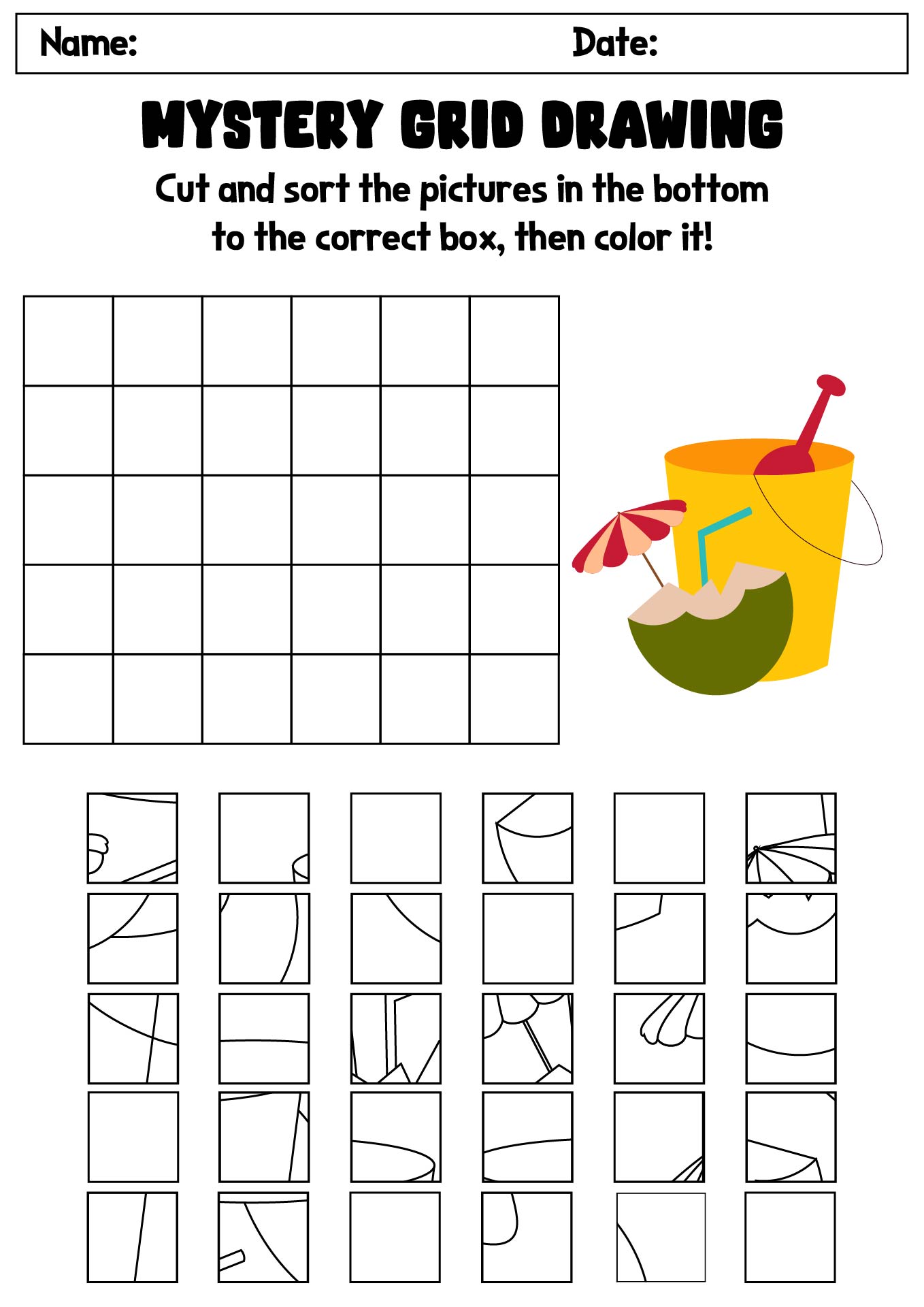
Grid drawing for children is a foundational visual arts technique that breaks complex images down into manageable coordinate squares to teach spatial awareness, coordinate mapping, and proportion estimation. According to the National Art Education Association (NAEA), structured observational drawing methods foster critical visual-spatial intelligence by training the human eye to isolate lines, angles, and negative spaces from a larger composition. This systematic methodology bridges concrete perceptual recognition and abstract fine-motor execution for early learners, transforming intimidating artistic subjects into accessible geometric puzzles. Educators and parents utilize printable worksheets alongside Photo Flashcards to establish reliable visual anchors, guiding children through sequential coordinate tracking without overwhelming cognitive bandwidth. By pairing physical drawing sheets with realistic photographic stimuli, learning environments cultivate acute attention to detail and foundational geometric literacy necessary for both advanced visual arts and geometry.
Visual Learning & Skill Snapshot:
- Core Focus: Systematic spatial division of photographic references into structured coordinate grids for early learners.
- Target Skill: Spatial reasoning, visual discrimination, fine-motor proportion control, and coordinate mapping.
- Key Recommendation: Begin with 2×2 or 3×3 simple photo grids before progressing to complex multi-square ratios.
Core Principles and Visual Learning Overview
Grid drawing for children operates on the psychological principle of chunking, where complex visual information is segmented into bite-sized spatial coordinates to reduce cognitive overload during artistic creation. When young learners pair structured Grid Drawing templates with high-contrast photographic references, the brain bypasses symbolic drawing shortcuts—such as drawing a generic house instead of observing actual architectural angles—and engages true observational processing. This method reinforces left-brain analytical tracking through coordinate identification combined with right-brain creative execution through line weight and shading. Utilizing printable grid sheets encourages children to scan methodically from square to square, establishing robust habits of visual tracking, hand-eye coordination, and precise spatial estimation that translate directly into mathematical geometry readiness.
Key Specifications and Breakdown
| Age / Learning Stage | Visual Skill & Grid Ratio | Pedagogical Application & Scaffolding |
|---|---|---|
| Ages 4–6 (Early Years) | 2×2 Grid (Large squares, bold lines) | Focuses on basic shape tracking and quadrant identification using simple object photographs. |
| Ages 7–9 (Early Elementary) | 3×3 or 4×4 Grid (Standard proportions) | Teaches coordinate mapping and angle estimation using nature and animal photo references. |
| Ages 10+ (Advanced Elementary) | 5×5+ Grid (Complex detail scaling) | Refines proportional accuracy, shading depth, and fine-motor line control with detailed subjects. |
Visual-spatial training through structured drawing promotes foundational cognitive mapping, enhancing both perceptual accuracy and mathematical coordinate comprehension in early childhood development. — National Art Education Association (NAEA)
Step-by-Step Practical Application and Printing Guidelines
Implementing grid drawing for children requires selecting high-contrast, developmentally appropriate reference images and pairing them with clean, uncluttered printable worksheets. Educators should print identical grid lines over both the source photograph and the blank drawing canvas to ensure clear spatial correspondence for the child. Instruct learners to start at the top-left square (coordinate A1) and complete each box individually, covering the remaining squares to minimize visual distraction and reinforce targeted focus. Incorporating a variety of Educational Activities alongside these printouts ensures that children generalize their spatial mapping skills across diverse subjects, moving seamlessly from photographic recognition to freehand proportional sketching.
Common Challenges and How to Avoid Them
Children frequently struggle with grid drawing when the source image contains excessive background clutter or when the grid lines are faint and difficult to track across the page. To prevent frustration, instructors should select clear, isolated photographic subjects and use bold, high-contrast grid lines that clearly define every individual coordinate square. Another common hurdle involves children attempting to draw the entire picture at once rather than focusing strictly on one isolated square; educators can solve this by providing a small paper window mask that covers all surrounding squares except the active target area. Encouraging a slow, methodical pace guarantees that young artists build confidence in their proportion estimation rather than rushing through the exercise and missing critical spatial intersections.
💬 Frequently Asked Questions
Explore More Free Learning Printables and Visual Activities on WePhotoAgency
Empowering early childhood cognitive development and artistic confidence requires access to diverse, high-quality, and structurally sound pedagogical resources. Caregivers, teachers, and homeschoolers can discover an extensive collection of printable materials by browsing the comprehensive visual learning archives available directly through WePhotoAgency.com.
Visual Reference Gallery