Introduction
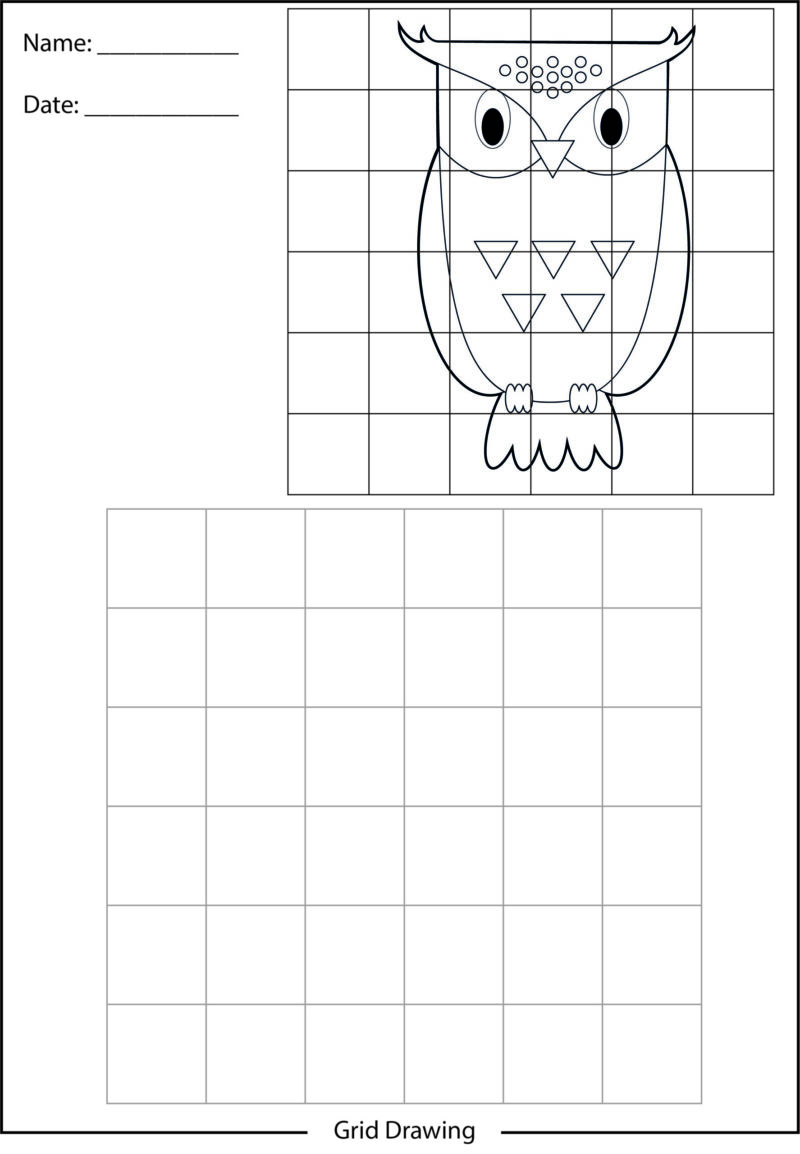
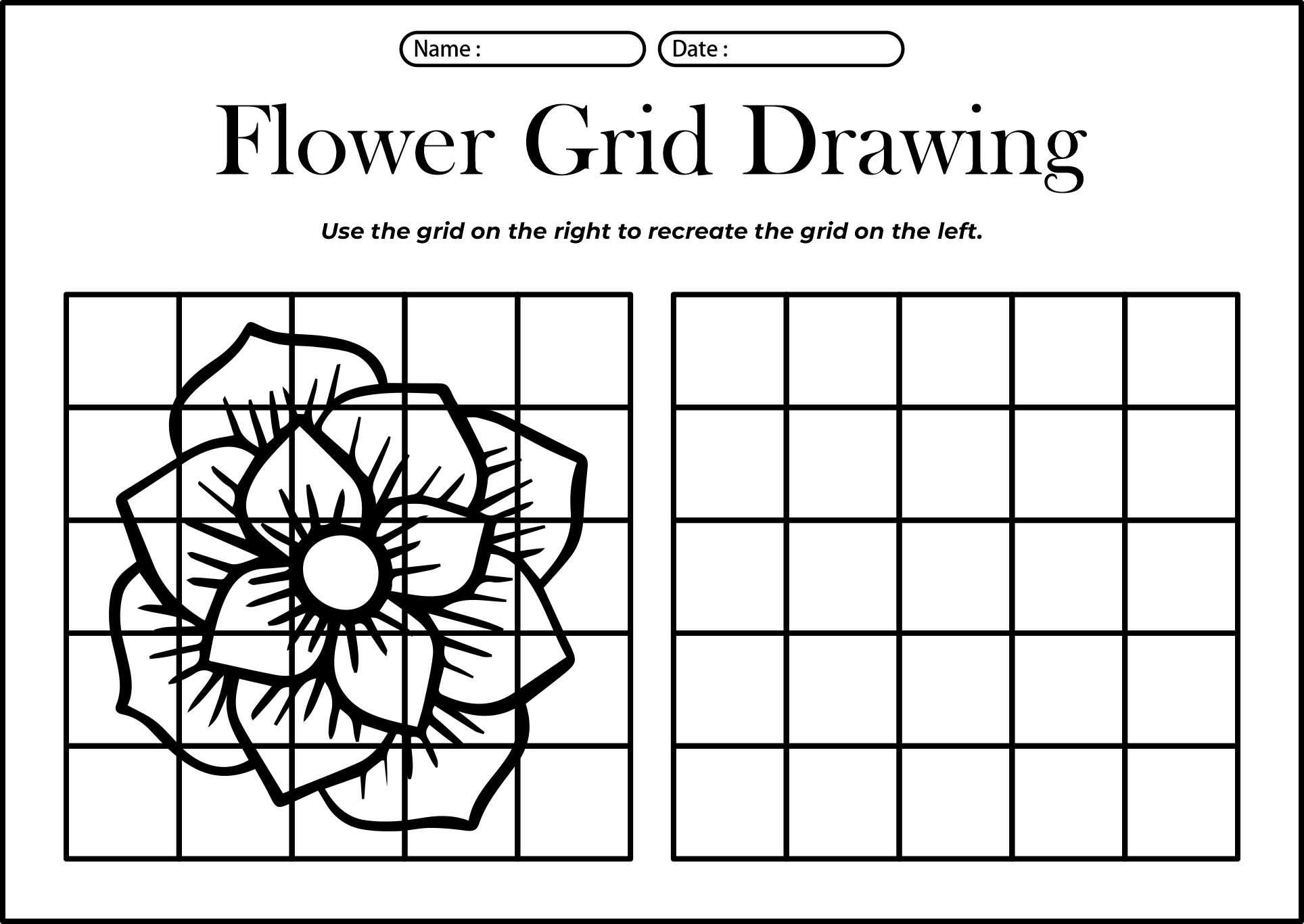
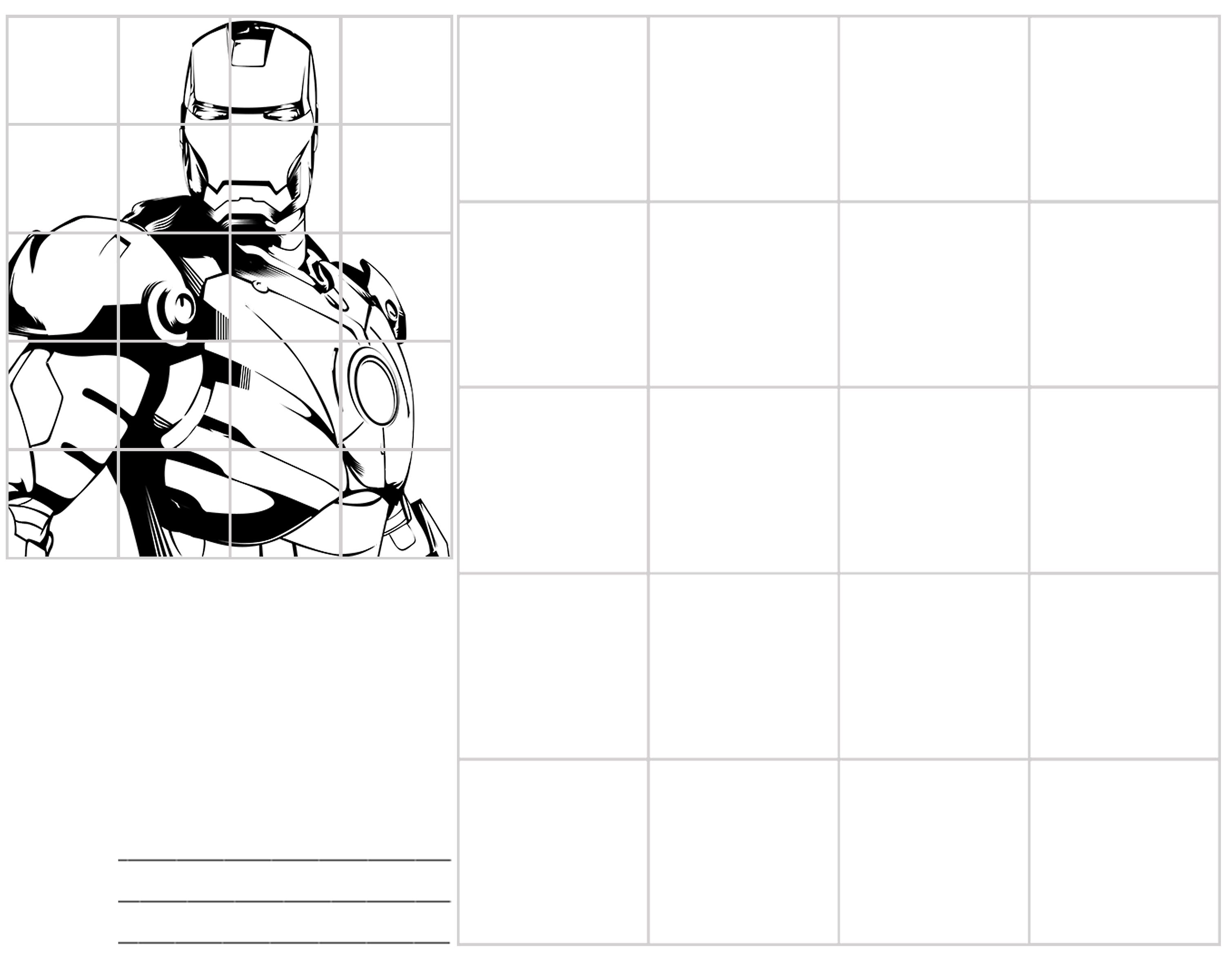
Grid drawing ideas easy approaches simplify complex visual stimuli by breaking realistic imagery down into manageable coordinate squares for young learners. According to the National Association for the Education of Young Children (NAEYC), structured visual-spatial activities actively support cognitive development and fine-motor precision in early childhood education. By pairing printable Grid Drawing templates with concrete photographic references, educators provide children with a reliable framework for understanding scale, symmetry, and spatial orientation. These structured Educational Activities bridge the gap between abstract observation and tactile execution, ensuring young artists build foundational confidence without cognitive overload.
Visual Learning & Skill Snapshot:
- Core Focus: Simplified coordinate-based visual reproduction using photographic reference materials.
- Target Skill: Spatial reasoning, visual discrimination, fine-motor proportion, and observation accuracy.
- Key Recommendation: Implement low-density grids (2×2 or 3×3) before transitioning to complex multi-box templates.
Core Principles and Visual Learning Overview
Simplified grid methodologies function by transforming holistic visual processing into targeted, local-level coordinate analysis. When children analyze Photo Flashcards partitioned by intersecting lines, cognitive processing shifts from overwhelming whole-image recognition to focused section-by-section transcription. This systematic breakdown aligns directly with early elementary developmental milestones, where children transition from symbolic scribbling to accurate geometric representation. Utilizing high-contrast reference images printed alongside blank matching grids eliminates the guesswork of proportion estimation, allowing learners to concentrate entirely on line placement, angle identification, and pencil control.
Key Specifications and Breakdown
| Age / Learning Stage | Visual Skill & Grid Ratio | Pedagogical Application & Scaffolding |
|---|---|---|
| Ages 4 to 5 (Pre-K) | 2×2 Matrix, Bold Primary Lines | Focus on simple shapes, basic silhouettes, and fundamental hand-eye coordination development. |
| Ages 6 to 7 (Early Elementary) | 3×3 Matrix, Moderate Detail | Emphasize realistic photo flashcard translation, proportional sizing, and line continuity across grid borders. |
| Ages 8 to 9 (Advanced Primary) | 4×4 Matrix, High-Contrast Reference | Develop advanced spatial mapping, angle estimation, and independent self-correction mechanisms. |
Structured visual partitioning significantly accelerates proportional estimation and spatial working memory capacity in early childhood learners. — National Art Education Association (NAEA)
Step-by-Step Practical Application and Printing Guidelines
Successful implementation requires high-contrast, distraction-free printouts paired with durable writing instruments that prevent hand fatigue. Educators begin by selecting clear, authentic photographic subjects—such as animals, everyday objects, or botanical elements—overlaid with distinct, non-distracting grid lines. Next, provide children with a matching empty grid sheet positioned side-by-side with the reference card to encourage horizontal scanning and direct visual comparison. Instructors guide learners to isolate one individual square at a time, checking intersecting points where lines cross curves or edges before drawing the corresponding stroke. This sequential scanning method prevents cognitive fatigue and instills an orderly, analytical approach to visual arts that transfers naturally to geometry and reading literacy.
Common Challenges and How to Avoid Them
Children frequently struggle when starting with dense grids that contain an overwhelming number of coordinate boxes, which can trigger frustration and visual burnout. To prevent this hurdle, restrict initial drawing prompts to low-density matrices (such as four or nine total squares) and gradually increase complexity as spatial confidence solidifies. Another common obstacle occurs when learners draw details without verifying boundary intersections; combat this by teaching finger-tracking techniques where children trace the top and side coordinate markers before sketching. Ensuring that both the reference photograph and the working grid share identical dimensions further eliminates scaling confusion, maintaining a stress-free and highly rewarding creative experience.
💬 Frequently Asked Questions
Explore More Free Learning Printables and Visual Activities on WePhotoAgency
Educators, parents, and developmental specialists seeking comprehensive visual learning resources can access the full collection of developmental assets directly through WePhotoAgency.com. Discover an extensive library designed to foster cognitive growth, spatial reasoning, and artistic confidence in young learners everywhere.
Visual Reference Gallery