Introduction
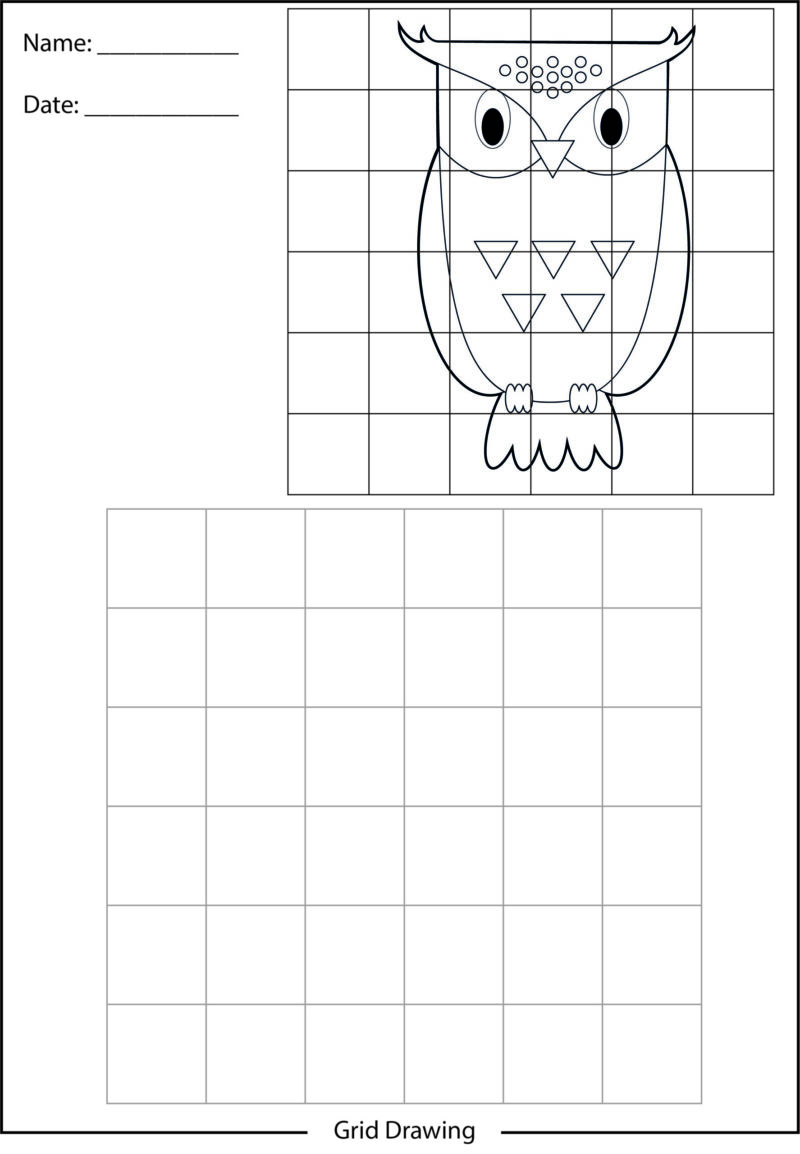
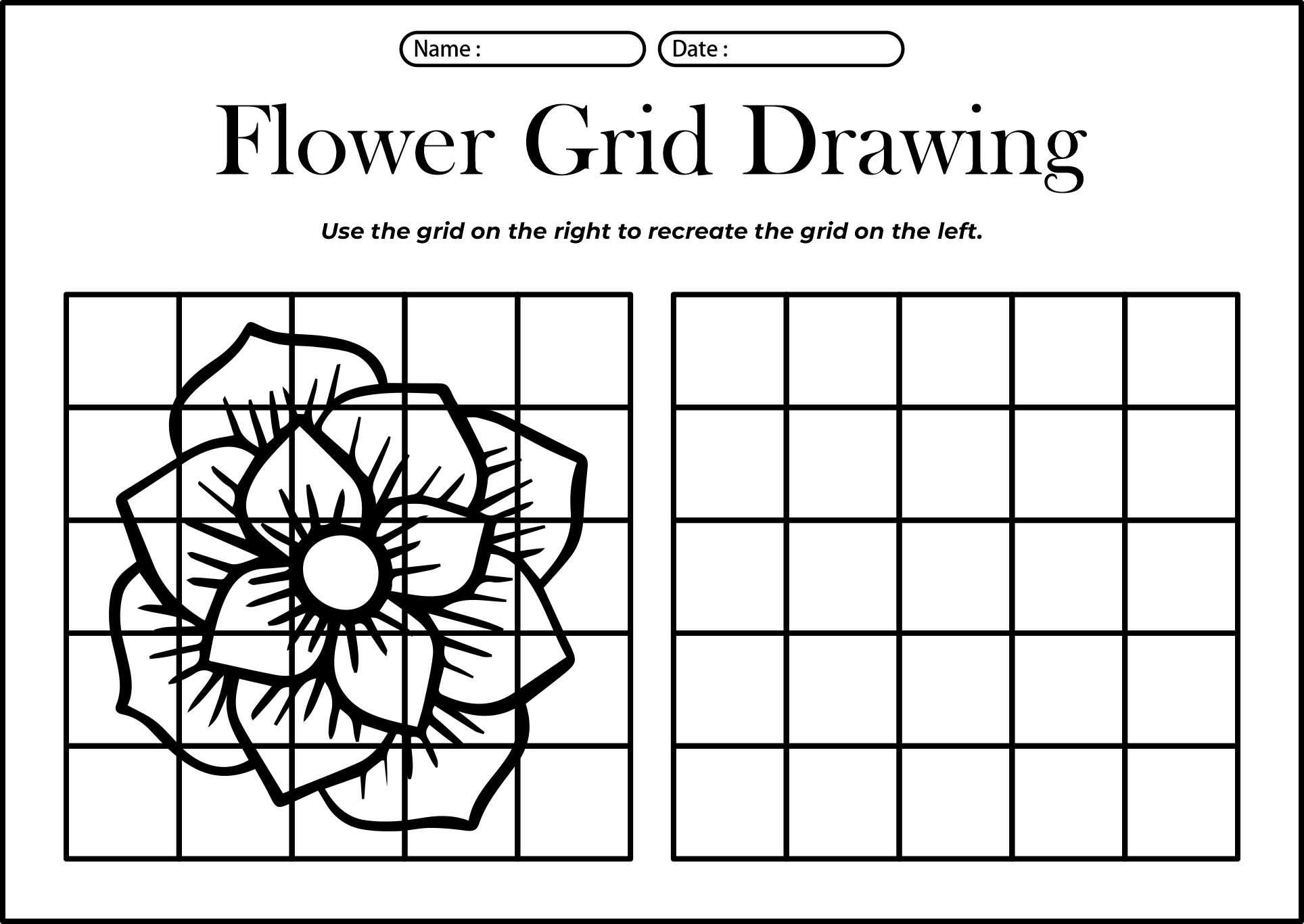
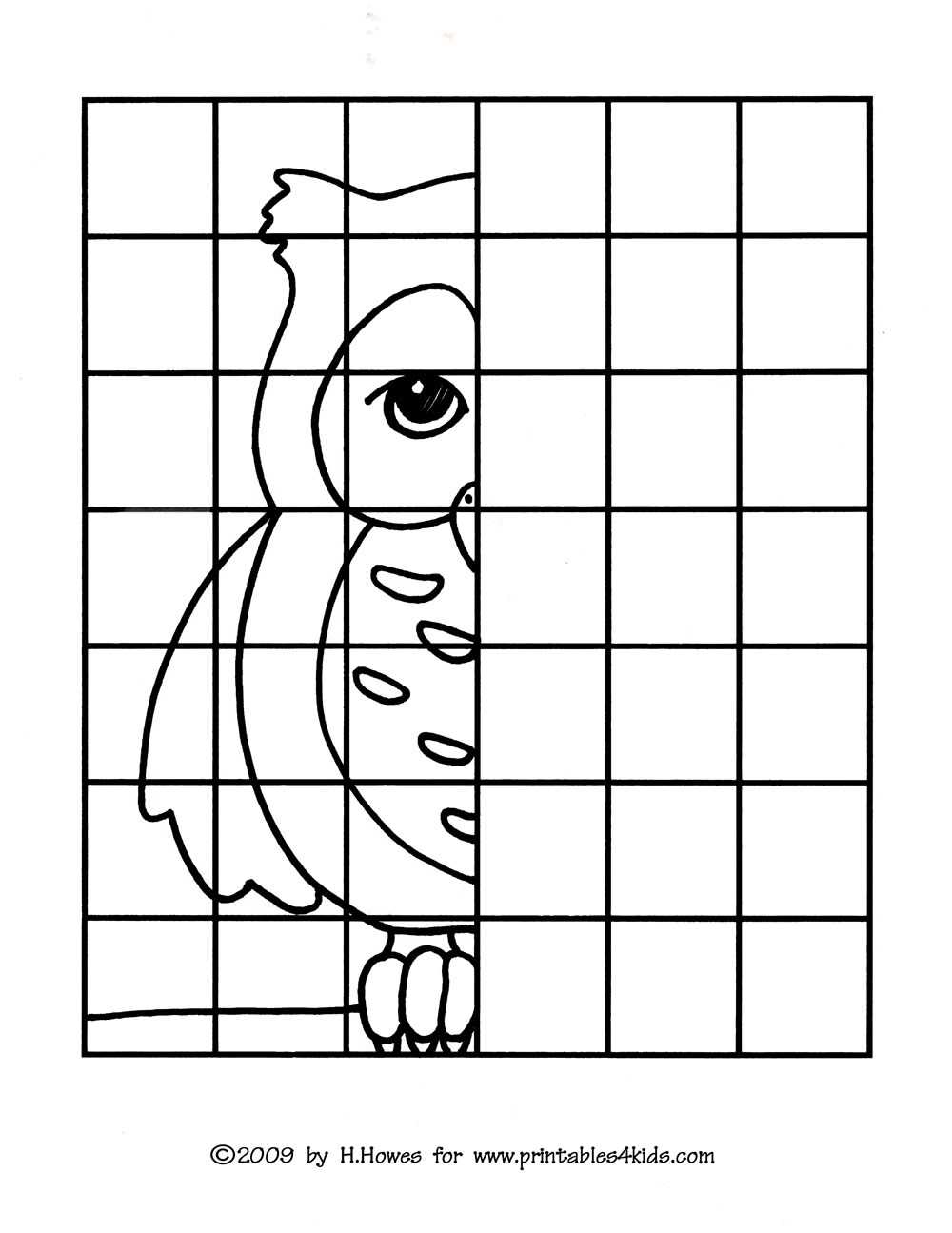
Grid drawing easy methodologies involve breaking down complex real-world visual stimuli into manageable coordinate squares to foster spatial awareness and fine motor precision in early learners. According to the National Art Education Association (NAEA), structured visual observation tasks significantly enhance children’s ability to translate three-dimensional spatial relationships onto a two-dimensional plane. Utilizing printable grid templates alongside real photo visual flashcards transforms abstract drawing concepts into concrete, achievable cognitive exercises. Educators and parents leverage these structured visual frameworks to build foundational drawing confidence without overwhelming developing attention spans.
Visual Learning & Skill Snapshot:
- Core Focus: Systematic coordinate-based image replication using simplified grids for young learners.
- Target Skill: Spatial reasoning, visual discrimination, fine-motor proportion estimation, and observation.
- Key Recommendation: Begin with 2×2 or 3×3 square ratios paired with high-contrast photo references before advancing to complex matrices.
Core Principles and Visual Learning Overview
Grid drawing easy techniques operate by training the developing brain to isolate individual fragments of an image rather than processing the composition as an intimidating whole. When children focus exclusively on the contents of a single grid square, cognitive load decreases, allowing precise hand-eye coordination to match lines, curves, and shading proportions. Integrating realistic photo flashcards within this process bridges the gap between photographic observation and traditional illustration. This active engagement strengthens neural pathways responsible for visual-spatial processing, geometry recognition, and attention to detail during the formative early elementary years. For more related activities, check out our Grid Drawing Dog.
Key Specifications and Breakdown
| Age / Learning Stage | Visual Skill & Grid Ratio | Pedagogical Application & Scaffolding |
|---|---|---|
| Ages 4-5 (Early Preschool) | 2×2 Matrix; Basic Shape Isolation | Pair high-contrast Photo Flashcards with oversized squares to teach line continuity. |
| Ages 6-7 (Kindergarten) | 3×3 Matrix; Proportion Estimation | Utilize structured Grid Drawing worksheets featuring familiar animals and objects. |
| Ages 8-9 (Early Elementary) | 4×4 Matrix; Complex Detail Mapping | Implement independent Educational Activities focusing on realistic photo replication. |
Structured visual partitioning significantly reduces cognitive overload and enhances proportional accuracy in early childhood artistic development. — National Art Education Association (NAEA)
Step-by-Step Practical Application and Printing Guidelines
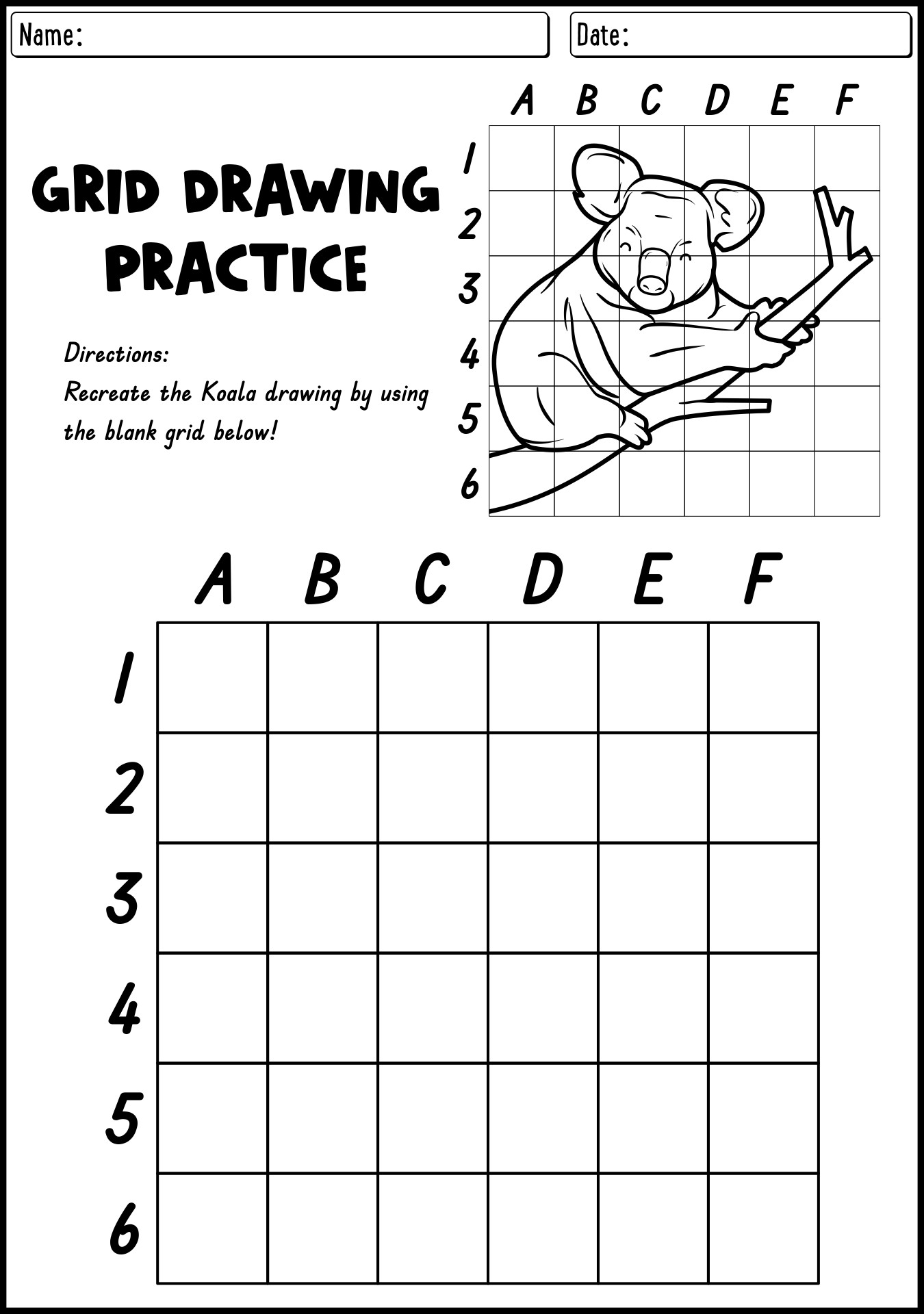
Executing a successful grid drawing lesson requires precise alignment between the reference image template and the blank drawing worksheet. Instructors should print matching grid overlays onto durable cardstock to prevent tearing during repeated eraser use by young hands. Begin by instructing children to identify coordinate markers, such as letters along the top and numbers down the side, to locate specific squares. Guide learners to inspect one individual square at a time, drawing intersecting lines or curves exactly where they cross the grid borders, before assembling the complete picture across the entire matrix.
Common Challenges and How to Avoid Them
Young learners frequently encounter frustration when attempting to draw entire objects across multiple grid squares simultaneously instead of isolating each individual coordinate box. Overcoming this hurdle involves using opaque window cards or physical masks to temporarily block surrounding squares, forcing complete visual concentration on the active zone. Additionally, ensuring that initial reference photos feature bold outlines and uncluttered backgrounds prevents sensory overload, keeping the exercise accessible, rewarding, and developmentally appropriate for every participating child.
💬 Frequently Asked Questions
Explore More Free Learning Printables and Visual Activities on WePhotoAgency
Accessing comprehensive educational resources empowers parents, homeschoolers, and educators to deliver impactful visual arts instruction without extensive preparation time. Discover a vast library of classroom-ready assets, worksheets, and developmental tools by visiting the main portal at WePhotoAgency.com to elevate early childhood learning today.
Visual Reference Gallery