Introduction
Creative stem activities for kids merge artistic expression with scientific inquiry by developing spatial intelligence, mathematical proportion, and observational discipline through structured visual learning exercises. According to the National Association for the Education of Young Children (NAEYC), deliberate integration of early artistic observation and geometric manipulation significantly enhances children’s cognitive processing speed and fine-motor precision. Systematic approaches utilizing printable grid worksheets and real photo references bridge abstract mathematical concepts with tangible fine-arts practice, ensuring young learners build robust foundational architecture for future academic achievement.
Visual Learning & Skill Snapshot:
- Core Focus: Creative stem activities for kids connecting optical observation with geometric grid scaling.
- Target Skill: Spatial reasoning, visual discrimination, fine-motor proportion, and photo-based concept mastery.
- Key Recommendation: Pair high-contrast photo references directly with modular Grid Drawing templates to isolate visual quadrants.
Core Principles and Visual Learning Overview
Visual learning requires structured analytical frameworks that teach children how to translate complex three-dimensional observations into coordinated two-dimensional representations. When incorporating Photo Flashcards into daily curricula, educators provide concrete visual stimuli that encourage children to analyze lines, negative space, and tonal values. These foundational drawing exercises act as physical manifestations of coordinate geometry, allowing young minds to decode complex shapes into manageable, mathematically proportional grid segments. Implementing structured Educational Activities guarantees that tactile art creation continually reinforces essential logical reasoning and pattern recognition milestones.
Key Specifications and Breakdown
| Age / Learning Stage | Visual Skill & Grid Ratio | Pedagogical Application & Scaffolding |
|---|---|---|
| Ages 3-4 (Early Explorer) | 1×1 to 2×2 large coordinate boxes | Utilize high-contrast photographic cards to teach basic shape matching and quadrant isolation. |
| Ages 5-7 (Emerging Artist) | 3×3 intermediate proportional grid | Focus on line weight, proportion estimation, and contour tracing from real-world photographic subjects. |
| Ages 8-10 (Advanced Student) | 4×4 or higher fine-detail matrix | Emphasize precise scale factor conversion, negative space analysis, and independent grid mapping. |
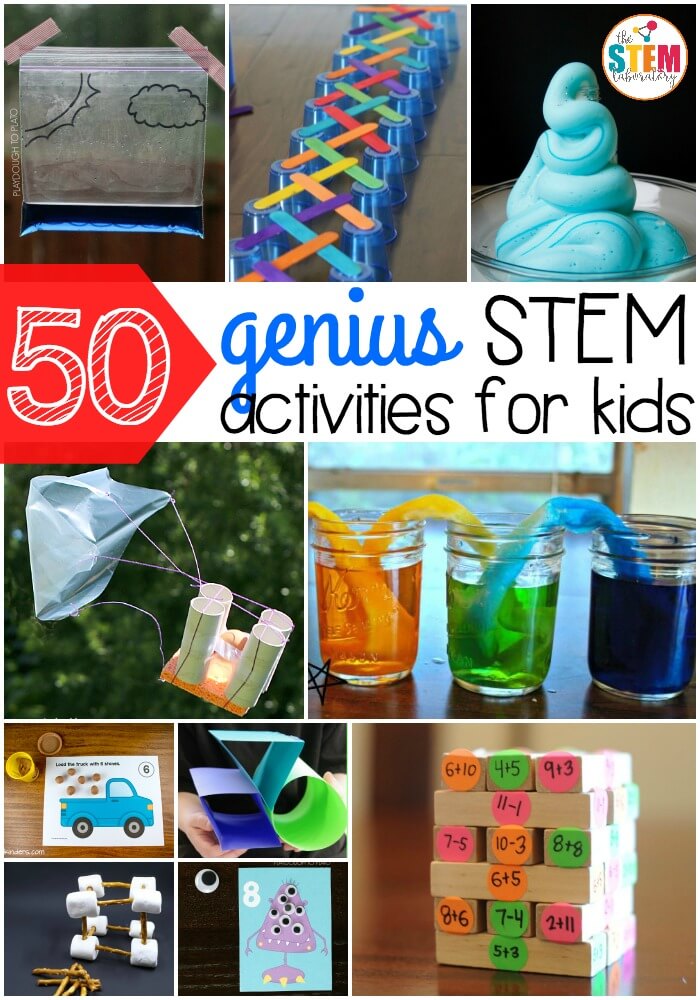
Early visual-spatial training systematically accelerates mathematical comprehension and geometric problem-solving capabilities by strengthening neural pathways dedicated to mental rotation. — National Art Education Association (NAEA). For more related activities, check out our Easter Stem Activities For Kids.
Step-by-Step Practical Application and Printing Guidelines
Successful implementation of visual STEM lessons begins with high-resolution printing on durable, heavyweight cardstock that withstands repeated pencil erasures and marker applications. Educators must first select a clear photographic reference paired with a corresponding numbered grid worksheet, ensuring alignment marks remain visible across all four quadrants. Children then systematically copy individual grid squares line by line, cultivating patience, meticulous observation, and strict coordinate tracking. This methodical sequence prevents cognitive overload, transforming intimidating artistic tasks into manageable, highly structured scientific experiments in visual proportion.
Common Challenges and How to Avoid Them
Frustration during detailed drawing exercises typically stems from working at an inappropriate scale or attempting to process an entire image simultaneously rather than isolating individual grid quadrants. Instructors can eliminate this hurdle by supplying physical cropping tools or viewfinders that isolate single squares, forcing the brain to focus strictly on abstract lines rather than the recognizable whole object. Scaffolding the activity with larger grid dimensions initially before graduating to fine-detail matrices ensures continuous confidence building and sustained cognitive engagement without unnecessary anxiety.
💬 Frequently Asked Questions
Explore More Free Learning Printables and Visual Activities on WePhotoAgency
Empowering young minds through integrated artistic exploration and spatial reasoning requires accessible, high-quality resources designed for modern classrooms and home learning environments. Discover an extensive library of professional printables, visual reference tools, and structured pedagogical assets by exploring the complete collection at WePhotoAgency.com.
Visual Reference Gallery