Introduction
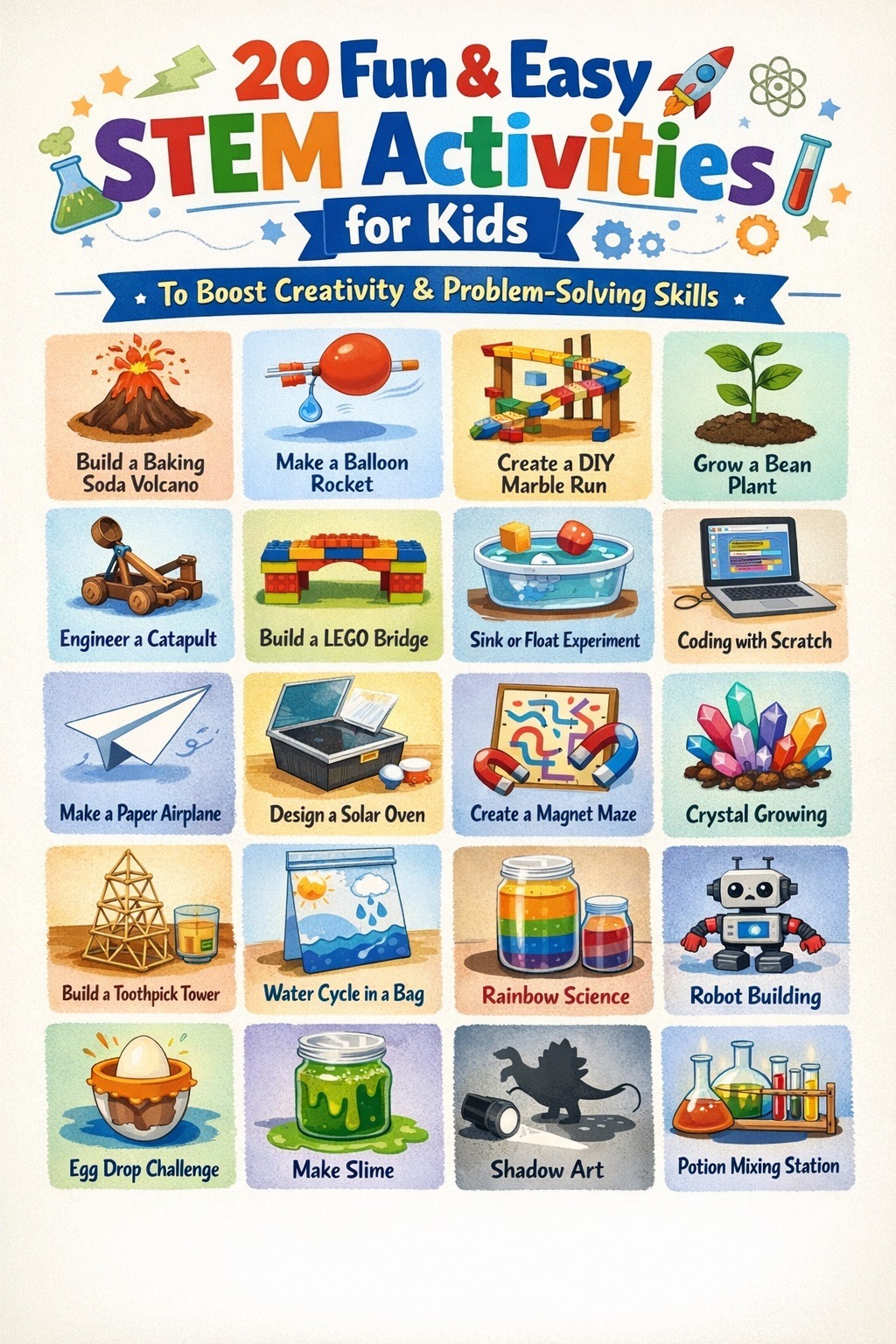
Biology stem activities for kids merge scientific observation with fine-art precision through structured visual frameworks that accelerate cognitive growth. According to the National Association for the Education of Young Children (NAEYC), integrating visual arts and structured inquiry during early childhood significantly enhances spatial reasoning, fine-motor coordination, and scientific literacy. By utilizing printable grid worksheets and macro-photographic cards, educators transform complex botanical and zoological anatomy into accessible, hands-on learning experiences. Engaging young minds with accurate visual representations fosters an early appreciation for natural sciences while building foundational drawing and proportion estimation competencies. Integrating tools from Educational Activities expands these foundational lessons into comprehensive cross-curricular units suitable for classrooms and home learning environments.
Visual Learning & Skill Snapshot:
- Core Focus: Biology stem activities for kids connect visual observation of nature with measurable spatial mapping skills.
- Target Skill: Spatial reasoning, visual discrimination, fine-motor proportion, and biological concept mastery.
- Key Recommendation: Pair photographic stimulus cards directly with proportional grid templates to bridge concrete observation and abstract drawing.
Core Principles and Visual Learning Overview
Biology stem activities for kids develop critical observation skills by teaching young learners to break complex organic structures down into manageable geometric components. Utilizing macro-photographic stimuli alongside Grid Drawing exercises enables children to analyze negative space, symmetry, and scale ratios in natural specimens such as leaves, insects, and animal skeletons. This methodological approach bridges the gap between scientific inquiry and artistic expression, ensuring that learners grasp anatomical structures through tactile creation. Furthermore, incorporating detailed Photo Flashcards provides children with high-resolution visual references necessary for accurate scientific rendering and classification.
Key Specifications and Breakdown
| Age / Learning Stage | Visual Skill & Grid Ratio | Pedagogical Application & Scaffolding |
|---|---|---|
| Ages 4-5 (Early Learners) | 2×2 or 3×3 simple grids | Focuses on macro leaf veins and basic insect shapes using high-contrast visual cards to teach fundamental symmetry. |
| Ages 6-8 (Early Elementary) | 4×4 moderate grid division | Explores floral anatomy and skeletal structures, emphasizing proportion estimation and detailed contour line work. |
| Ages 9-10 (Advanced Elementary) | 6×6 complex grid scaling | Involves intricate cellular patterns and micro-photography analysis, fostering advanced spatial mapping and scientific observation. |
Intentional engagement with visual arts and spatial problem-solving tools directly strengthens neural pathways associated with mathematical proportion, analytical observation, and scientific categorization. — National Art Education Association (NAEA)
Step-by-Step Practical Application and Printing Guidelines
Biology stem activities for kids require clear preparation and precise printing methods to ensure students can accurately perceive and replicate biological details. Educators should print photographic reference cards on durable, matte cardstock to eliminate glare and preserve color fidelity during close-up inspection. Grid worksheets must be scaled cleanly with high-contrast boundary lines so young learners can easily isolate coordinates without visual fatigue. Instruct students to examine individual grid squares sequentially, matching coordinate points from the photo card to their drawing paper before executing pencil strokes. This systematic breakdown reduces cognitive overload, builds confidence, and ensures accurate proportion reproduction across diverse natural subject matter.
Common Challenges and How to Avoid Them
Biology stem activities for kids frequently encounter setbacks when children attempt to draw entire organic forms at once rather than focusing on isolated grid coordinates. Educators and parents can prevent this frustration by utilizing viewfinders or paper masks to cover extraneous grid cells, keeping the learner’s attention strictly fixed on one quadrant at a time. Another common hurdle involves improper scaling when transitioning from smaller photographic flashcards to larger drawing grids; teaching children to measure anchor points with a ruler or sighting finger resolves this proportion discrepancy effectively. Providing consistent, non-judgmental scaffolding during these initial mapping phases ensures that children maintain enthusiasm for both scientific inquiry and artistic creation.
💬 Frequently Asked Questions
Explore More Free Learning Printables and Visual Activities on WePhotoAgency
Accessing comprehensive educational resources transforms everyday science lessons into engaging, multi-disciplinary masterpieces that captivate young learners. Educators, parents, and homeschoolers seeking further inspiration can explore the complete collection of free printables, visual arts guides, and cognitive development tools available directly through WePhotoAgency.com to elevate early childhood instruction today.
Visual Reference Gallery